Showing posts with label Orlando Magic. Show all posts

Thursday, August 30, 2012

Orlando Magic Signs Promising Guard E'Twaun Moore


The Orlando Magic, according to the Orlando Sentinel, have agreed to sign guard E’Twaun Moore to a two-year deal.

In reading that, Moore’s name isn’t one that jumps out of the page at you. But maybe there is some up-side to the deal.

First it starts as a numbers game.

Before bringing in Moore, the Magic have 16 players listed on its roster. Only four of those players—Jameer Nelson, Arron Afflalo, J.J. Redick and Ish Smith—are guards. The team could use some extra depth at either of the guard positions.

Since college he’s played mostly as a two-guard but he did spend some time in blowouts with the Boston Celtics last year playing a little bit of point guard. The Magic will give him a shot at playing both positions and his flexibility coming off the bench will help his case.

Also Moore is only 23-years-old and has been in the league for only one season. He’s a young player that still has time to develop. He didn’t see many minutes with the Celtics in his rookie season but the 2012-13 Magic season will likely be a league-wide try-out for a lot of guys to see if they can play in the NBA.

What may be hidden behind Moore’s 8.7 minutes per game and 2.9 points per game as a rookie and his second-round draft pick status may suggest, Moore was a pretty accomplished college player at a pretty big basketball school.

Moore was a four-year player at Purdue University. There he became the school’s third highest scorer (2,136) and finished first in three-pointers made (243), games (140), games started (137), minutes played (4,517) and wins (107). He led the Boilermakers in scoring his first three years on the team and was a AP honorable mention All-American.

In the summer league in July Moore led the Boston Celtics squad in points per game.

He wasn’t a high pick or expected to do much for Boston last year but people have started to wonder how high his ceiling is.

Moore can shoot the ball—something Orlando teams in recent years loved to do—and in college he was able to score in a variety of ways and spots on the floor. But in an article for ESPN Boston Chris Forsberg wrote that Moore was fearless and “unflappable”, a trait that endeared him to the Boston front office.

The Orlando Magic will be a proving ground for young players this season. And with what Moore did this summer as well as his college resume, he does seem like a good player to give a bigger opportunity to and take a chance on.

Photo Credit.
AP Photo/Amy Sancetta

Jameer Nelson Is Orlando Magic Team Leader, for Better or Worse


After playing second fiddle to Dwight Howard ever since the two arrived on the Orlando Magic roster as rookies in 2004, Jameer Nelson is finally starring in the lead role for the Orlando Magic—for better or worse.

Just this past off-season, Jameer Nelson re-signed with the Magic for a three-year deal. It was a surprising move, considering the Magic were looking to trade Dwight Howard and move into a rebuilding phase. Why commit to a 30-year-old point guard who has been in decline for the past three seasons?

The answer is simple: leadership.

Ever since Nelson broke onto the mainstream basketball scene as a senior at St. Joseph’s, people have raved about his leadership abilities and his heart.

Nelson was the leader of an underdog St. Joseph’s team in the 2003-2004 season that went 27-0 in the regular season and finished 30-2 and advanced to the NCAA Elite Eight. It was the best season in school history. Nelson won the Wooden and Naismith awards. A Sports Illustrated article by Michael Bamberger called him, “the best player in the nation.”

In Orlando, he started on the bench and earned his playing time and made All-Star Steve Francis expendable. He’s worked hard on the court and plays good defense.

He had his best season in 2008-2009, averaging 16.7 points per game, 5.4 assists per game, 1.2 steals per game and shooting 50.3 percent from the floor while earning his one and only All-Star selection. And while the Magic made it all the way to the NBA Finals that season, Nelson got hurt and missed the second half of the season and the majority of the playoffs.

He hasn’t been the same player since then. His past three seasons have been three of the four worst shooting seasons of his eight-year career. He had his lowest points per game average in five years. With the Magic still fielding a competitive team with Dwight Howard, there was much rumor and speculation that an upgrade needed to be made at point guard.

This year, the Magic have low expectations, much like his St. Joseph’s team did. And while he doesn’t have Dwight Howard to execute the pick-and-roll with him and toss alley-oops to, he also didn’t have him at St. Joseph’s either.

The Magic won’t be expecting Nelson to guide the Magic as far as he did St. Joseph's. But they do want him to bridge the gap between that Magic team that made the finals and the next Magic team they hope will do the same.

His backup is the young and unproven Ish Smith, so it’s likely Nelson will get a lot of minutes; really making this his show to run.

Nelson is there to provide a veteran presence to a young team. He is there to be a steady, consistent performer on a team without much direction currently. He is there to show the new guys what you can achieve with heart and hustle and how to act like a professional.

Gone are the wishy-washy, indecisive and immature (remember all those silly technical fouls?) ways of Howard. Nelson’s high-character attitude will be counted on to mentor the younger players and help them through what could be a frustrating season.

Does Jameer Nelson being the team’s best player mean that they’ll win a lot of games? Probably not.

But they won’t ever quit, and that will be an important attitude moving forward.

Photo Credit.
AP Photo/John Raoux

Wednesday, August 29, 2012

Should the Orlando Magic Sign Greg Oden?


While the Orlando Magic traded away a former seven-foot No. 1 draft pick, there have been rumblings of another former seven-foot No. 1 draft pick possibly coming to Orlando to play for the Magic.

When the Magic traded away Dwight Howard as part of a four-team deal, they lost a franchise center. The package the team got in return made it clear that this team is in full-rebuilding mode. It seems bottoming out and getting another crack at the top pick in the NBA Draft wouldn’t be an unwelcome event for management.

But as the team looks to the future and life after Dwight Howard one player that there have been rumors of coming to Orlando and working to take Howard’s place in the lineup is former top-pick Greg Oden.

Oden, like Howard, has been a bit indecisive about his future in the NBA. In an interview with Grantland writer and former Ohio State teammate Mark Titus, Oden said he plans to take the 2012-2013 season off in order to properly rehab his knee.

“I just want to play basketball. I could've signed with a team after Portland cut me and just sat on the bench and collected paychecks, but that's not my style,” he said. “That just seems really unethical. Besides, money doesn't matter to me. I've got enough money. All I want is to get 100 percent healthy and get back on the court.”

According to the Tribune-Star in Terre Haute, Ind. playing in 2012-2013 isn’t totally out of the question.
It says that his agent, Mike Conley Sr., said the Oden was talking to the Miami Heat about joining their team.

Oden spoke on that, saying, “What I told Mike was ‘Look, I want to get back with a team. I want to play. If there’s a chance that later on in the [NBA] year, if I feel good or if I’m healthy enough to play, I would love to play this year.’ That’s the conversation we had. I think some people kinda blew that up and took his words and kinda changed them around. I know I need to get healthy first before I do anything.”

In response to this chatter, OrlandoMagic.com’s John Denton wrote that the Orlando Magic were reportedly one of a few teams to be interested in Oden’s services.

If Oden were to get healthy and he was still committed to playing basketball—two strong “ifs” right now—could Oden be a viable replacement for Howard at center?

After all the injuries, cell phone pictures and overall disappointment from his production, many forget that coming out of college in 2007 they hype for Oden was even bigger than it was in 2012 for Anthony Davis.
ESPN NBA writer Chad Ford said at the time, “In a league devoid of big, traditional centers — Oden’s numbers add up to a perfect 10,” and “Oden’s agility, flexibility, balance and explosiveness are remarkable for a player his size. He’s a 2 guard in a center’s body.”

Oden was marked as an exceptional shot blocker with a solid low-post game. Even looking back at the draft and knowing the success that No. 2 pick Kevin Durant had and will continue to experience, Chad Buchanan—the team’s acting GM in 2012 and former Director of College Scouting—said in February that he would still have drafted Oden, standing by the team’s decision.

“I was very excited,” he said. “A chance to draft a player who could potentially get your franchise to your ultimate goal. Looking back on it, we were all excited. We had visions of Greg being a great player for us for years to come.”

Looking at the Magic roster, two of the prime contenders to get major minutes at center are second-year pros Gustavo Ayon and Nikola Vucevic. As rookies in the lock-out shortened 2012 season, Ayon, 27-years-old, played in 54 games starting 24 of them, averaged 5.9 points per game, 4.9 rebounds per game, 0.9 blocks per game and shot 53.6-percent from the field.

Vucevic, 21-years-old, played in 51 games with 15 starts, averaged 5.5 points per game, 4.8 rebounds per game, 0.7 blocks per game and shot 45.0-percent from the floor.

That’s not to say either couldn’t develop further, especially the much younger Vucevic. But in Oden’s 82-game career, despite being constantly hampered by injuries, Oden averaged more minutes per game than either player, has career averages of 9.4 points per game, 7.3 rebounds per game and 1.4 blocks per game while shooting 57.7-percent.

Take a look at his numbers before his injury in the 2009-10 season. Oden had started every game and had increased his shooting percentage, free-throw shooting percentage, points per game, rebounds per game and block per game compared to his rookie season. It suggested a player on the rise.

With the Magic in full rebuilding mode, would it hurt to take a flier on Oden?

In numerous articles it has been speculated that the Magic took back such a paltry offering in return for Howard in order to bottom out and receive a high draft pick to rebuild around. And that could still happen.
But in bringing in Oden the team could add another former No. 1 pick, a guy that was supposed to be a franchise-changer.

With the right deal, the upside is that with a change of scenery and training staff—Oden said he felt rushed to return in Portland—and with a franchise that seems to want to be patient with its roster Oden could finally heal properly and return to the court. From there he could either develop into the franchise player everyone had hoped he would become (yes, a long-shot but it would be the best-case scenario) or a solid center that gives you a double-double night -in and night-out.

Worst case, Oden never heals and continues to be hurt and the team cuts its losses, which should be very low considering Oden doesn’t have too much contract leverage; he hasn’t played since December 5, 2009.

The Orlando Magic could be the right opportunity for Oden to continue his basketball career. It all starts with new GM Rob Hennigan’s emphasis on being patient with this team and continues with an opportunity for playing time because of a need for good players.

Oden always was a good player.

Photo Credit:
AP Photo/Don Ryan

Saturday, August 11, 2012

Dwight Howard Trade: Coming to Terms with It from the Viewpoint of a Little Kid


The majority of people who get involved in sports media start as huge sports fans, usually at a young age.

That statement holds true for me as well.

So when I flipped on SportsCenter and watched a snippet of Dwight Howard speaking at his press conference following his trade to the Los Angeles Lakers the fan in me couldn’t help but come out, specifically the little kid in me.

Now, Dwight Howard has done nothing to me personally. He seems like a nice guy, even if he does have a little trouble making up his mind. He gives back to the community. The adult and objectionable journalist in me understands that this man made a decision on what he wanted to do with his life that was perfectly legal.

The biased little kid in me, however, felt betrayed. That little kid thought back to the last time he felt so strongly against a player: when the Phillies traded third baseman Scott Rolen.

When Scott Rolen made his Major League debut with the Phillies, the team that drafted him, I was in first grade. It was the first year I started paying attention to professional sports and the Phillies were my team. I listened to the game broadcasts on the radio on the beach in afternoon games and watched the games on television by night.

The next year was his official rookie season and it was the first time I saw a baseball game live. It was 1997, the first year there was Interleague play. It was the Phillies against the New York Yankees at Veterans Stadium. Curt Schilling against Hideki Irabu. Scott Rolen was playing third base and it was an incredibly hot day out. The Phillies won. It’s a day I’ll always remember, and Rolen played a part in it.


He won the National League Rookie of the Year award in 1997 and I couldn’t be happier that my guy on my team was getting recognized; and this was when the Phillies were the cellar-dwellars of Major League Baseball.

Over the years I would watch Rolen come up with big hits, make incredible diving stops and showcase his arm and throw a runner out. One year for Halloween I even wore a Phillies hat and jersey and taped “Rolen” and “17” on my back as my costume.

Then in 2002 he was traded. He had made it clear he was unhappy in Philadelphia, that he didn’t think the management was making the right moves in order to win, told everyone he would leave the team via free agency and rejected a huge contract offer.

Not wanting to lose him for nothing, the Phillies traded him to the St. Louis Cardinals. And just like that he was no longer my guy. He was a traitor.

I felt jilted, rejected. What my thirteen-year-old self thought was that by Rolen refusing to play for the Phillies it meant that he was refusing to play for me, in front of me. All those memories we “shared” of me watching him, growing up with him, rooting for him were for nothing. He threw them away by forcing his way out.

I booed him when the Phillies played against him. When I would play baseball video games and Rolen would come up to bat I would bean him in the head. It was how I treated someone that betrayed me.

Now over time my feelings have softened. The Phillies moved on without him, brought up a bunch of other guys that they drafted that I could grow up with (Jimmy Rollins, Ryan Howard, Chase Utley, Pat Burrell and Cole Hamels) and won a World Series. Now when I see Rolen make his patented diving stop and throw across the diamond I forget the hate, smile and think back to the good times I had watching him do it in a Phillies uniform.

Now back to Dwight Howard. I have been an Orlando Magic fan since the first grade as well (I marveled at Shaq’s skill and fell in love with his fun-loving ways). Shaq was one of my favorites and Dwight Howard was just as special.

He played the game with so much power but always had a smile on his face. There were the Superman moments at the Slam Dunk contest. I defended him to my friends about how he should be the league MVP. Just all his sillyness, impromptu dance competitions and thunderous slam dunks. I went to an Orlando Magic-New Jersey Nets game in New Jersey with my girlfriend in January 2011. We watched Dwight come out of the game—an Orlando blowout—and hang out on the end of the Magic bench with Jameer Nelson and secretly eat a hot dog. When the game ended he walked past our section and threw his shoe into the stands and it landed a seat over from our seats (what a mob it was of people fighting for that!).

But then there was last season. The trade rumors. The refusal to sign an extension. The famous smile was gone. It didn’t look like Howard was having fun anymore. There was the bickering with Stan van Gundy. And then there was the back injury that sidelined him for the end of the season and the Magic crashed and burned out of the playoffs.

The end was coming and I had come to terms with that as a fan. Maybe it was the fact that he was gone for the end of the season and playoffs and that you hadn’t heard from him himself in the media that I just got used to him being around.

But then he popped up in this press conference. He was smiling. He was making jokes. “Hey,” I thought to myself, “he wasn’t doing this last year.”

And then he said, “I’m happy to be a Laker. I’m so excited.”


The little kid in me perked up. “You’re happy? You found someone better? Was me rooting for you not enough?”

Silly, yes, but sometimes we can’t hide those moments when sports bring out the little kid in us: all the joy in winning, the disappointment in losing, and the childish response to grown men making perfectly normal decisions on choosing where to work and what organization will make them happiest—really the same decision I am attempting to make in my professional career.

Just like anything in pop culture—movies, television, music—we invest time in sports, we invest interest in sports, we allow ourselves and our emotions to escape and run free in sports and what we invest in are the memories: the moments that put us in awe, where we were and who we experienced them with.

All summer in my house my family has asked me where Dwight was going. When he was traded my mom and one of my brothers texted me. We talked about the memories we had watching him play or his interviews and we laughed.

Memories and shared experiences that were brought on by sports and in this case, Dwight Howard. So in this case I’ll allow the kid in me to come out a little and tell him it’s ok to feel a bit spurned. I’ll let myself feel that strongly because it means that there are some strong emotions and memories tied to Dwight being in Orlando.

And creating those memories in the first place is the great thing about sports in general.

Photo Credits.
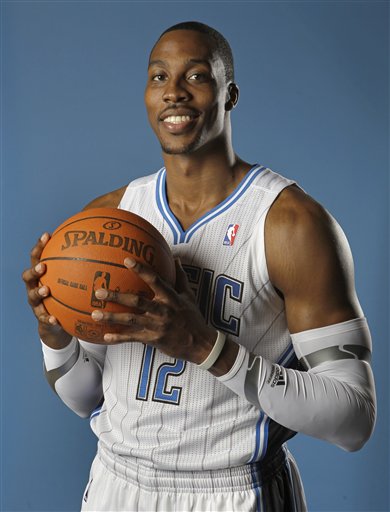
Dwight Howard:  AP Photo/Reed Saxon
Scott Rolen: AP Photo/Chris Gardner

Dwight Howard Trade: Magic Fail Again at Getting Fair Value for Franchise Player


Since the start of the new millennium the Orlando Magic have been lucky enough to have, at different times, two franchise players: Tracy McGrady and Dwight Howard.

Both players were All-Stars with unbelievable talents that the team attempted to build around. Both led the team to the playoffs—in 12 seasons since the 2000-01 season the Magic have made the playoffs nine times—and Howard even led the team to the NBA Finals in 2009. Both were MVP-worthy players that the fans adored.

Both McGrady and Howard also grew very unhappy in Orlando and demanded to be traded. Those wishes were granted now that Dwight Howard has been traded to the Lakers in a four-team deal.

The Magic look to recoup just as they did when they dealt McGrady and lost Shaquille O’Neal in free agency before him. Trading away franchise players is never a fun task for any organization, but how have the deals worked out for Orlando?

Magic trade Tracy McGrady, Juwan Howard, Tyronn Lue and Reece Gaines to Rockets for Steve Francis, Cuttino Mobley and Kelvin Cato

At the time this deal was completed it was often viewed as a fair trade. In retrospect, Orlando was the clear loser in this deal.

Francis was the centerpiece the Magic received in this deal. In his first game with Orlando he hit a layup at the buzzer to lead the team past the Milwaukee Bucks. But after 23 games with the Magic, Francis also grew upset because the team dealt Mobley, who Francis had played each of the previous six seasons with.


“I can't put it into words,” he said at the time. “Playing with a guy, living with a guy, just knowing that every day when I wake up that's something I can count on, that I'm going to be in practice or in a game with Cuttino. Him not being here is going to be tough for me. I don't know what I'm going to wake up for.”

Mobley was a talented offensive player who was sent to Sacramento with Michael Bradley for the defensive-minded Doug Christie—another failed move.

Francis finished the season with 21.3 points per game, a shade under his career high, then was traded to the New York Knicks at next season’s trade deadline for Trevor Ariza and Penny Hardaway’s expiring contract.

Cato was also traded in February of that second season after the deal to Detroit for Darko Milicic and Carlos Arroyo.

The Magic got three players for Tracy McGrady—who was named to four more All-Star games in six seasons with Houston—and all were gone within two years. None brought in draft picks or franchise altering players. The Magic didn’t make the playoffs either season. Also, Howard would be Houston’s starting power forward the next three seasons, a solid addition to the lineup.

Magic trade Dwight Howard, Chris Duhon and Earl Clark to Lakers and Jason Richardson to 76ers. Magic receive Arron Afflalo and Al Harrington from Denver, Nikola Vucevic and Moe Harkless from Philadelphia, Josh McRoberts and Christian Eyenga from the Lakers and a lottery protected first-round draft pick from the Lakers, 76ers and Nuggets.

The Magic trade away the league’s best center and multiple Defensive Player of the Year award-winner. Howard wanted out and things were getting ugly. The Magic also relieve themselves of expensive contracts given to Richardson and Duhon.

What they get in return is a bit uncertain, however. The Magic didn’t land the second or third-best player in the deal (Andrew Bynum or Andre Iguodala in whatever order you like). They didn’t get an All-Star in return. They didn’t wind up getting Pau Gasol, like some earlier versions of the deal suggested. They also couldn’t shed Hedo Turkoglu’s awful contract, one that they originally refused to give him when he left after the 2009 NBA Finals trip before Orlando traded back for him.
 

They got Arron Afflalo, a nice defender who was also Denver’s second-leading scorer last season with 15.2 points per game last season.  His points per game totals have risen the past few years. But will Orlando be balanced enough for him to succeed, or will he be the key guy that team’s focus on and he struggles?

Since the 2001-02 season Al Harrington has never averaged fewer than 10.5 points per game. He’s another solid scorer who is a good secondary option for a contending team. But it’s hard to imagine the Magic contending this year and some in the media are already saying he could be moved by the February trade deadline for an expiring contract. He’s 32-years-old and has three years left on his deal.

Eyenga is 23 and only played in seven games last year. Harkless is a first-round rookie with a lot of athleticism. Vucevic and McRoberts are average low-post players that will compete in a crowded frontcourt with Glen Davis, Gustavo Ayon, Justin Harper, Andrew Nicholson and Kyle O’Quinn for playing time. Vucevic seems to have more upside than McRoberts.
  
The first-round draft picks are nice, but will be spread out over the next few years, will most likely be later in the first-round and are lottery-protected (for the best center in the league the Magic couldn’t even get unprotected picks?) There are also talks that the picks could also be traded in the future. Without knowing who will be available or what future trade packages they can get for them, the value is really up for debate.

It’s obviously easy to rate the McGrady deal in hindsight and who knows if any of the young players (mainly Harkless, Afflalo and Eyenga) could blossom into bigger roles than with their previous teams.

But with the way the McGrady trade panned out and with the initial reaction towards the Howard deal, it’s apparent that Orlando has struggled in getting fair value in return for their franchise players.

Photo Credits.
Dwight Howard:  AP Photo/John Raoux, File
Tracy McGrady:  AP Photo/Ed Betz
Arron Afflalo:  AP Photo/ Jack Dempsey, File

Monday, May 21, 2012

Orlando Magic: Is Mike D'Antoni the Best Fit for the Head Coaching Job?


The Orlando Magic firing general manager Otis Smith made sense. The team rid itself of a person who made questionable moves regarding the roster and ultimately did not get the job done.

The writing was also on the wall for head coach Stan Van Gundy. The team terminating him signifies that priority number one is to keep Dwight Howard on the team. While the franchise center may not have asked Magic CEO Alex Martins to fire Van Gundy, as both have claimed, the poor relationship from the start had obviously deteriorated.

A choice needed to be made—Van Gundy or Howard—and ownership, right or wrong, went with the player.

The Magic are invested in winning with Howard. The front office makes personnel moves centered around who he will work best with, both on the bench and on the court.

With Howard on the court, the team thrives on teams doubling the center and the ball getting kicked out to a bevy of shooters on the wings. They made the NBA Finals with a similar approach only three seasons ago and even last season had the third-best record in the conference for most of the season.


Without him the team struggles to find that space, evident in the playoffs against Indiana. Individually the talent is mediocre. There are a few solid supporting players but without Howard the roster is not good enough to contend for a playoff spot, let alone a championship.

The bigger issue is that the team is full of bad contracts that would be extremely difficult to maneuver. Hedo Turkoglu, Jason Richardson and Glen Davis are locked in to contracts that are not friendly to trade. So improving the roster will be very hard, with the 19th pick in the first-round and the mid-level exception the best options to add some much needed firepower to the offense.

So if it will be difficult to improve on the individual talent on the roster why not put in a system that will work to get the most out of them?

That’s where Mike D’Antoni steps in.

The 61-year old coach is known as being an offensive-minded coach who loves to push the ball in transition and shoot from outside frequently.

The Magic is a team that, while Dwight Howard is the centerpiece, actually relies more on its outside shooting.

Putting D’Antoni in charge of the offense really would only tweak the way they got those shots off.

Things with the Phoenix Suns didn’t end up in a championship mainly because there just was not enough size or emphasis put on defense. But when Howard is healthy—which is most of the time—Orlando has the best center in the league who is the only player to win three consecutive Defensive Player of the Year awards in league history. From the ’07-’08 season to the ’10-’11 season the team was always a top 10 team in defensive efficiency.

New York didn’t end well for D’Antoni but there were certainly some strenuous circumstances that ultimately cost him his job. In the beginning there just wasn’t a lot of talent and the salaries that were acquired in the previous regime would take some time to correct those mistakes.

There were a lot of injuries this past season, which always hurts a team.

The Knicks acquired Carmelo Anthony, who is a talented offensive player. But the system that works best for Anthony is an isolation offense as opposed to D’Antoni’s ball movement and shooting offense. Then when Anthony, Amar’e Stoudemire and Jeremy Lin were all on the court together there were struggles in sharing the ball and not enough practice time for them to gel as teammates.

With Orlando it is obvious that the team is at its best when it’s moving the ball and shooting three-pointers. They have a star player in Howard, but he isn’t necessarily the focal point of the scoring.


Bringing in D’Antoni would keep the Magic a shoot-first team. Howard would get open for more looks running the pick-and-roll. And if Howard misses games due to suspension or injury then Orlando would still be able to find open looks from beyond the arc—unlike in the playoffs—because the offense would push the ball in transition resulting in fast breaks and more space.

Also if the team were to bring in D’Antoni there is an increased chance they could sign Steve Nash with the mid-level exception to run their offense at least for a year.

After Jameer Nelson’s struggle of a season the Magic organization was rumored to be looking to upgrade the point guard position. Nash was a name often linked to the team. He’s still playing at a high level despite his advancing age and if he flourished under D’Antoni’s system, winning two MVP awards.

He’s also done pretty well in Phoenix the past few years with a roster arguably less talented than the one Orlando has. And with Nelson rumored to be interested in declining his player option and becoming a free agent, point guard could be an even bigger concern for the Magic.

A Nash and D’Antoni reunion in Orlando would be interesting, but D’Antoni also has experience coaching a number of Orlando’s players. He worked with Quentin Richardson, Jason Richardson and Earl Clark in Phoenix, Chris Duhon in New York and Howard himself as an assistant on the USA team that won gold in the 2008 summer Olympics.

There’s no guarantee that D’Antoni is the best coach available or that it will work out in Orlando, but there’s no guarantee with any of the other coaches on the market either.

There’s no guarantee that Howard will stay (and if he doesn’t then maybe the team should look into a different option for a coach), but he is on the team right now and all signs point to the Magic committing themselves to retaining him.

So with little flexibility the best way for this team to contend may be to let D’Antoni run his offense with one that already is loaded with sharpshooters and finally give him a defensive presence to rely on.
 
Photo Credits.
Mike D’Antoni: AP Photo/Tony Gutierrez
Dwight Howard (left): AP Photo/John Raoux
Steve Nash (right): AP Photo/Matt York

Sunday, April 29, 2012

2012 NBA Playoffs: The Maturation of Big Baby


Has “Big Baby” grown up?

When Orlando Magic man-child Dwight Howard was shut down for the rest of the season, playoffs included, with a back injury a huge void was left in the post.

The minutes would go to Glen Davis, a six-foot-nine-inch, 289 pound forward who was often considered a soft jump shooter rather than a tough post presence.

But in the past month, Davis has been one of Orlando’s best and most consistent players.

In the Magic’s 81-77 victory over the Indiana Pacers in Game 1 of the first round of the NBA playoffs, Davis put up the numbers and did all the little things that go unnoticed in the box score that helped the Magic win the game.

Davis played 40 minutes against Indiana, scored 16 points, grabbed 13 rebounds and blocked three shots.

Davis started at center and was forced to defend Pacers All-Star Roy Hibbert. Hibbert stands at seven-feet-two-inches, but Davis outperformed him in almost every facet of the game.

The former Georgetown standout did have nine blocks, but he only scored eight points (averaging 12.8 this season) and shot 3-11 from the field (down from his 50-percent shooting percentage this season), meaning Davis did a good job bodying him up on defense.

Hibbert did grab 13 rebounds, but that equals Davis’ output despite the five-inch height advantage.
Davis was also instrumental in key moments at the end of the game.

With about 27 seconds left in the game with Orlando ahead by only one, an unusually cold Ryan Anderson shot an ill-advised three-pointer that clanged off the rim. “Big Baby” was there to grab the rebound though, his sixth offensive rebound of the game.

Then with 10 second remaining in the game, the Pacers were inbounding the ball at half-court down by only three. The pass went to Indiana leading-scorer Danny Granger, who was confronted by Davis. Granger dribbled across the three point arc looking for a shot but Davis played good, tight defense on him and forced Granger to travel, giving Orlando back the ball and all but assuring the team victory.

It wasn’t just this one game where Davis has stepped up, however. He’s been great for the team the entire month.

For the season, Davis is averaging 23.4 minutes per game, 9.3 points, 5.4 rebounds and is shooting 42-percent from the field.

In the month of April, however, Davis has upped all those totals. In 12 regular season games during the month Davis has averaged 31.4 minutes per game, 16.4 points, 8.8 rebounds and is shooting 50-percent from the field. His free-throw shooting percentage has also improved, as he’s shooting 70-percent from the charity stripe this month compared to 68-percent this season; it’s also more reliable than the 49-percent Howard was shooting from the line.

In 13 starts Davis is averaging 15.5 points and 8.3 rebounds per game.

“He's playing great basketball. Glen has shut out all the distractions. He's not trying to do anything except play the game as well as he can possibly play it. That's it,” Magic head coach Stan Van Gundy told the media in the beginning of April.

Davis has said that he understands his role better now and Van Gundy has pointed out that the big man has become more of a team-oriented player rather than one worried about his own stats and agenda. A new attitude coupled with what looks like a forward in better shape than the beginning of the season has fans hopeful that the 26-year-old is starting to turn the corner.

Losing Howard was a huge blow to this team because everything they do on offense and defense revolves around the reigning Defensive Player of the Year. But with Davis hitting open shots, defending the rim and bodying up his opposing center it gives the team a legitimate low-post presence.

The Magic have had some rough games this season, especially without Howard in the game but as Davis blooms into a big-time contributor at the end of the season he also gives the team a real chance to do some good things in the playoffs this year.

Photo Credits.
AP Photo/David Zalubowski

Monday, April 16, 2012

Orlando Magic Finally Giving Daniel Orton an Opportunity


Daniel Orton was a five-star recruit while in high school but the three years after graduation have not been very glamorous. It’s been a challenging road for him, but he may have finally caught the break he needed.

With Dwight Howard missing time because of a herniated disk and Glen Davis injuring his right knee in Sunday night’s game Daniel Orton saw minutes that he hasn’t gotten since high school and was productive.

In Orlando’s 100-84 victory over Cleveland Sunday night—which clinched a playoff spot—Orton played 29 minutes, scored 11 points, grabbed four rebounds, blocked three shots and had a team-high five steals.

He was a very productive player for the Magic and stepped up when his team needed him. It was good form to see from a player who has not been relied upon in recent years.

Orton committed to Kentucky in 2009 and came off the bench to back up DeMarcus Cousins. He averaged only 13.2 minutes per game, 3.4 points per game and 3.3 rebounds per game. He did have 1.4 blocks per game but his other numbers were low. Still, he opted to go to the NBA Draft.

The Magic selected him with the 29th overall pick, making him a first-rounder and hoping he could add some size behind Dwight Howard.

There were many concerns about Orton. Despite his soft shooting touch and shot-blocking abilities, Orton was not considered a tough back-to-the-basket forward. There were even bigger questions about his conditioning and the health of his knees, which proved to be an issue.

A still raw prospect, Orton was sent to the New Mexico Thunderbirds of the NBA Development League to get more experience. He endured a season-ending knee injury in his second game.

Before even playing a game for the Magic, the team declined his option for a third season, so he will be an unrestricted free agent in the offseason.

This season he has only played in 10 games. He’s averaged 7.4 minutes per game, 1.7 points and 1.4 rebounds. But now he has a legitimate opportunity to prove what talents he currently has, his work ethic to improve on them and what potential he does have.

“Defensively, he was great on rotations and he’s a sharp kid. If he’d really decide to really, really work at it and everything, I think he showed that he’s capable of some things, especially on the defensive end,” head coach Stan Van Gundy told the media after the game. “But even offensively, I thought he did a good job in our pick-and-roll game. He knows how we want to play; he’s trying to play that way. I’m really happy for him.”

Without many big bodies, Orton will be needed to be a big body that protects the rim on defense. He needs to be productive on offense as well, because that team is built around getting the ball to the post and then kicking it out for the open jump shot. If Orton can’t make teams play him honestly, then the defense will just lock on the shooters and the offense, heading into the playoffs, will be at its worst.

Currently he has to play a big role for the Magic helping them as they prepare for the playoffs and filling in for Howard and Davis.

He’s also auditioning for a future in this league, one that he hopes will be brighter than the path his young career has started on.

Photo credits.
AP Photo/John Raoux

Monday, April 9, 2012

What Would've Happened if Tim Duncan Signed With the Orlando Magic?


Dwight Howard’s numbers this season have been very good. He’s averaged 20.6 points per game, 14.5 rebounds per game (a career high) and 2.1 blocks per game.

The drama he has brought to the organization however has been a huge distraction and looks like it is crippling the team and the franchise.

Will he stay in Orlando when his contract expires? Who can the team trade him to in order to avoid losing him for nothing? Does he want his coach fired?

His reputation and legacy look tarnished right now, the fans are starting to murmur that he may not be worth the drama and the Magic have slid from third in the Eastern Conference to sixth.

The situation is eerily similar to the one that happened in Orlando with Shaquille O’Neal. Both were No. 1 draft picks, both go by the “Superman” moniker and both were the best center in the league. Both struggle with free throws, both feuded with their coach and both are upset with the media in Orlando.

O’Neal bolted to Los Angeles. Many believe Howard will also move on to greener pastures.

While Howard causes a raucous in Orlando, it’s hard not to imagine what might have been if the Magic were successful in signing another previous No. 1 draft pick: Tim Duncan.

Prior to the 2000-01 season, Orlando saved up a lot of cap space and went after Tim Duncan (who had just won the NBA championship), Grant Hill (at the time a player many considered to be the next Michael Jordan, however lofty those expectations were) and Tracy McGrady (who was just coming into his own as an elite talent).

Duncan was close to signing with the Magic. The team offered him a six-year $67.5 million deal.

“It was probably a lot closer decision than people even think or even know,” Duncan told reporters during the 2007 NBA.

Close, but Duncan wound up returning to the San Antonio where he has since won three more NBA Championships and has a realistic chance for another this season.

So what would the Magic Kingdom look like now if the NBA’s most fundamentally sound player and nicest superstar changed addresses that summer?


First thing is the Magic never would’ve bottomed out in the 2003-04 season, won only 21 games and landed the No. 1 pick that the team used on Dwight Howard.

But with McGrady, Hill and Duncan, Howard wouldn’t have been needed. Much like what the great three-somes the Boston Celtics and Miami Heat have secured the past few years, championships would’ve been expected.

“It would have been a great combination,” McGrady said in an interview with the New York Daily News in 2010. When asked how many championships the team could have won his response was, “Enough to where I would have been satisfied with my career.”

Things would have been especially different in the 2004-2005 season. For one, it’s hard to imagine the Spurs winning that year without Duncan. It was the year Hill finally came back from injury and contributed to Orlando and McGrady would’ve been happy with the Magic and not been traded to Houston.

With those three on the roster and with complimentary pieces like Jameer Nelson and Pat Garrity surely they would have been a top tier team. They most likely would have made the playoffs and would’ve been a strong contender against the Miami Heat and Detroit Pistons.

Even had the team been unable to afford Duncan, Hill and McGrady, what kind of damage could a team with Duncan—and without McGrady-- have done?

The Eastern Conference, especially early in the new millennium, was not full of big-time centers. The majority of the great big men played in the West; Shaquille O’Neal, Kevin Garnett, Dirk Nowitzki, David Robinson, Karl Malone, Chris Webber and Yao Ming all played in the West.

The All-Stars in the East? Dikembe Mutombo, Jermaine O’Neal and a mostly-injured Alonzo Mourning. Surely a team with such a dominant big-man as Duncan could’ve done some damage in the Eastern Conference.

Think of some of the personnel moves the team could’ve made as well. Andrew DeClerq, Michael Doleac or John Amaechi could’ve been flipped for a more competent scoring forward to play alongside Mike Miller, or instead of drafting Steven Hunter in 2001 (because they needed a center) the team could’ve grabbed Zach Randolph, Gerald Wallace or Tony Parker—and we’ve seen what Parker has done with Duncan.


And while the knock on McGrady’s career was the he couldn’t get out of the first round of the playoffs, Duncan, on the contrary, is known as one of the best winners in the NBA history. A team-led by Duncan and his personality very well could’ve gone deeper into the playoffs than one led by McGrady, despite a cast not as good as the one in San Antonio.

What Duncan would not have brought, for sure, was the drama that McGrady and now Howard brought. Duncan—like Nash in Phoenix currently—would not have asked to be traded. He would’ve fought with whoever was by his side. He also wouldn’t have been a coach killer.

In fact, if Duncan had gone to Orlando he might’ve been able to save Doc Rivers’ job, and instead of winning a title with a veteran Celtics team, Rivers could’ve done it with an Orlando team built around Duncan.

McGrady and Howard created some unforgettable memories for the Magic in their times. And it’s still possible Howard, signed through next season, could sort things out and get this team back on track. But most assuredly with Duncan, the consummate professional, things in Orlando would have been drastically different over the past 12 years.

In the end, it worked out extremely well for Duncan and there is no regretting his decision.

Whatever Howard chooses to do, one can only hope he starts handling the situation more like Duncan—in a private manner—than O’Neal or LeBron James or Carmelo Anthony have in recent years.

Photo Credits.
Tim Duncan: AP Photo/Eric Gay
Tracy McGrady and Grant Hill: AP Photo/Peter Cosgrove
Dwight Howard: AP Photo/John Raoux

Thursday, April 5, 2012

Dwight Howard's Indecision Directly Affects the Play of the Orlando Magic


Dwight Howard has been the face of the Orlando Magic since he was drafted by the franchise with the first overall selection in the 2004 NBA Draft.

It’s Howard’s talent the team has been built around and it’s his personality that they take after.

The big man usually commands a double team in the post, so a lot of the players Orlando management has filled its roster with have been wing players that can hang around the outside, catch the kick-out and shoot three-pointers. They include guys like Hedo Turkoglu, Rashard Lewis, Ryan Anderson, J.J. Redick, Vince Carter and Jason Richardson.

And just like Howard has always seemed like the smiling, fun-loving center the Magic have been a fun team to watch. They are a team that loves to get out on the fast break and they score a lot of points because they hit a lot of three-pointers.

So it should be obvious that Howard’s indecision and overall change in attitude have become disastrous distractions to the team and have manifested themselves in the club’s play.

The questions and contradictions have been prevalent since the lockout was lifted.

All offseason the debate was whether the Magic would keep him or trade him. There was rumor and refute that Howard had asked for a trade. There was question as to which teams Howard had or had not said he would sign an extension with, or if any such list even existed. There was even tampering accusations that of course were downplayed by Howard himself.

There was the disaster around the trade deadline where it seemed like Howard had changed his mind every other hour about whether he would sign his option to stay with the team through next season or not.

And now there is the incident with head coach Stan Van Gundy. There was a report that Howard had asked the Magic to fire Van Gundy. The ever-quotable coach even admitted that people in the team’s management had told him the rumor was true. Yet Howard strolled over and vehemently denied it.

Someone is lying.

Amidst all the rumors, all the questions, the whole circus of the ordeal Howard and Van Gundy have insisted nothing changes about the way the team goes about its business, that the game at hand is what they are focused on, no matter how much they have to answer those questions.


But really, have the Magic been an example of an efficient, consistent team?

The explanation is in the results. The flip-flopping of the reported Howard situation is parallel to the inconsistency of the Magic games this season.

The team can go from a five-game winning streak (from January 8th to January 17th) to losing four in a row nine days later.

They can look downright pathetic in losses to the Celtics and Bulls, where they score less than 60 points in a game (56 and 59 points respectively) to scoring over one hundred points in victories the following night (102 and 103).

They can have, at one point, the third best record in the Eastern Conference, but lose to cellar dwellers like the New Orleans Hornets and Charlotte Bobcats.

Nothing about this team’s season has made much sense; not the way in which the pieces were put together, the inconsistencies the team shows, or how despite the media debacle the Howard situation has become that the team was a top-three team in the East for most of the season.

None of it makes sense until you realize that Howard is the face of the franchise. Really, the organization has taken after him and his lack of conviction of staying or going or being a good team or a bad one.

Since he has picked up his player option for next year, it doesn’t seem like calmer tides are in store in the near future either.

SVG says management admits Howard asked for a trade. Howard comes in to refute it. Awkward. Video From YouTube.


Photo Credits.
Dwight Howard: AP Photo/Frank Franklin II
Stan Van Gundy: AP Photo/John Raoux

Friday, December 9, 2011

Trading for "Big Baby" is Only the Start of a Turbulent Season for the Orlando Magic


On the first day that NBA teams could start training camp and make roster moves the Orlando Magic have been one of the most active teams out there. Active, however, doesn’t mean that they improved.

The team used it’s amnesty clause on Gilbert Arenas and waived him, signed free agents Larry Hughes and Gabe Pruitt and—the big move of the day—swapped Brandon Bass for Glen “Big Baby” Davis in a deal with the Celtics. There’s also the Dwight Howard trade and tampering rumors, making the Magic one of the more talked about teams in the NBA right now.

Most of the moves don’t actually improve the team though, which could mean this is only the beginning of a very tumultuous season.

Waiving Agent Zero was expected and smart. Through the amnesty clause, the remaining three years and $62 million of Arenas’ six-year $111 million deal will no longer count towards Orlando’s salary cap. Arenas didn’t produce much coming off the bench for Orlando and was not worth keeping around especially at that price.

With some cap wiggle room made available it was possible the Magic could’ve added some guys to improve the roster and possibly influence Howard to stay after this season. Going after Shane Battier—a good perimeter defender with a strong basketball IQ and that can knock down the open shot—was a promising sign, even if he did wind up signing with the Miami Heat.

Instead the Magic conducted a sign-and-trade for Davis.

When you think of Davis what comes to mind is his goofy “Shrek and Donkey” partnership with Nate Robinson, his game-winning shot against the Magic in the 2009 NBA playoffs when he ran down the sidelines and knocked over a little kid and him crying at the end of the bench after Kevin Garnett got in his face. His nickname is “Big Baby” for crying out loud. He also seems to be out of shape.

There is no sense that Davis is a mature player and his numbers don’t make him a guy you have to have on your team. Last year Davis averaged 11.7 points per game, 5.4 rebounds per game, 0.4 blocks per game and shot 45-percent from the field.

You know who put up similar, if not better, numbers? Brandon Bass. He averaged 11.2 points per game, 5.6 rebounds per game, 0.7 blocks per game and shot 52-percent from the field, all in fewer minutes per game. Bass is a tougher player and is a much better free-throw shooter.

Where is the improvement?

Throw in Hughes, 32, who didn’t play last year and has seen his points per game average on the steady decline since a career-high 22.0 points per game in the 2004-05 season, and Pruitt, who hasn’t played in two years and never averaged more than eight minutes a game in his two seasons of work, and the moves are all questionable.

This is the first day of the new season, the first day since the lockout that moves can be made. The team swapped a tough power forward for one with a baby moniker, signed two players who haven’t played in the league in at least a year and are on the verge of trading away or losing one of the best players in franchise history.

Usually the start of the season is a day of renewed hope for all fans, where every team is equal and has a chance to win the championship. Yet already it seems like the Magic have set themselves up for a long, turbulent season.

Photo Credits.

Glen Davis: AP Photo/Elise Amendola

Tuesday, January 25, 2011

Tracy McGrady Gives Orlando Magic Fans One Final Show


AP Photo/John Raoux

Picture Tracy McGrady, in Orlando, scoring and putting up big numbers.

It’s easy to think that Monday’s game could’ve been played in any year from 2000 to 2004, the time of McGrady’s four-season tenure with the Magic.

On Monday, though, McGrady was a member of the Detroit Pistons. His career arc is on the downward side, some say extremely close to the end, but he mustered enough to give fans in Orlando one more show, scoring 20 points in his team’s 103-96 victory.

McGrady has been a shell of his former self in Detroit. He’s appeared in every single game Detroit has played, which in recent years is something T-Mac has been unable to do. However, he is averaging only seven points per game, well below his career average of 20.8, which also went down a bit since he left Orlando (in four seasons with the Magic he averaged 28.1 points per game).

His 20-point performance Tuesday was only his third 20-point game of the season and it was only the 13th time he’s scored at least 10 points (he has almost as many games where he’s scored zero points, which he’s done seven times).

In Orlando, he was a star. He rose to the ranks as one of the best players in the NBA at the time. He could score at will, either with a long jump shot—sometimes fading back off of one leg—or driving to the basket and unleashing a dunk that would get the fans out of their seats.

With age, especially with a player who played as many minutes as McGrady did, players tend to lose some of the bounce in their step. But the aging of McGrady’s career was also hampered by a myriad of back and knee injuries.

He may have been robbed of some of his prime, but there is a long list of athletes that can say the same. What McGrady did do was go through all the grueling rehab, hear the criticisms come in bunches and just continue to play basketball.

He isn’t an All-Star anymore, but he still brings some value to the team he’s on, both on the court and off it. He’s rewarded the Pistons this month for taking a chance on him. His minutes have increased, as has his points per game average, rebounds per game and assists per game totals.

And he saves his best for his former teams. One of his other 20-point games came when he dropped 22 against Toronto January 14.

He’s played better recently, but that doesn’t mean he’s going to be an MVP-candidate anytime soon. Still, it was enjoyable to see McGrady playing in Orlando, showing one last glimmer of the player he used to be.

Even if it was for the other team this time.

Highlight video of Tracy McGrady with the Orlando Magic. Video from YouTube.

Wednesday, April 28, 2010

Dwight Howard Needs to Grow Up For Orlando to Win it All


AP Photo/Phelan M. Ebenhack

The Orlando Magic is the first team in the NBA Playoffs to advance to the second round and was the only team to sweep.

However, if Dwight Howard continues to go down the same path he has been the Orlando Magic may be eliminated sooner than the team expected to be.

It isn’t his skills that could let the team down. He recently won the NBA’s Defensive Player of the Year for a second consecutive season. He led the league in both blocks and rebounds, the only player in the history of the NBA to lead in both categories in two different years.

His offensive game is also improving as Dwight works on his post moves, footwork, and shooting touch to complement his thunderous dunks.

What needs to change is his fouling problems and his attitude and maturity. The two go hand-in-hand really.

This season Howard set a career-high in personal fouls, amassing 287 over the 82-game season as well as a career-high in fouls per game with 3.5. In a much related stat, Howard also registered the lowest minutes per game average, 34.7, since his rookie year.

In the playoff series against Charlotte Howard was whistled for five fouls the first two games and fouled out the final two. He failed to play 30 minutes in any of the four games and his scoring average was, for him, an awful 9.8 points per game, well below his season average (18.3).

Orlando is a deep team this year and Howard’s teammates were able to step up and finish off the Bobcats with ease, but this will not and cannot be the case as the playoffs continue. The Magic need Dwight Howard on the floor to win the championship.

The Magic’s backup post players are Marcin Gortat, Brandon Bass, and Ryan Anderson. All do some nice things: Gortat is a good rebounder, Bass is a physical banger with a good mid-range jumper, and Anderson is a good shooter.

None of them make the same impact Howard does, especially on defense.

Howard has proven to be a master shot-blocker. If he isn’t actually deflecting shots he’s altering them with his long arms and strong presence in the paint. He has the ability to also force players to think twice about even attempting to come down the middle of the lane while he is patrolling it.

He’s also a weapon on offense for the Magic to use.

He’s very difficult to guard for opposing post players. He’s either too big and strong for the smaller guys he gets matched up against or he’s too agile for the big brutes. The alley-oop has become a staple play for him and point guard Jameer Nelson, allowing for quick and easy points. Not to mention his thunderous dunks not only give the Magic points but it energizes the entire stadium and gets the fans into it.

However, when Howard is not on the floor his replacements do even worse offensively. They do not pose the same matchup problems that Howard does. They aren’t athletic enough to pull off the alley-oop like he does. They also rarely give the crowd that same reason to stand and cheer that Howard is able to.

Also without Howard the Magic are forced to become more one-dimensional. They rely heavily on the three pointer. If the team has a streaky night they could be in trouble without Howard on the floor. Howard provides another option, a player they can get the ball to in order to get points. Also, without him on the floor, the team doesn’t have the league’s best rebounder to corral the loose ball.

Further adding to Howard’s problems are attitude and maturity issues, more specifically to the game officials.

Howard feels that he isn’t being treated fairly. “There's a lot of things I feel don't go my way or our team's way,” he said after game four.

Howard now does a lot of complaining about the calls officials are making, which in turn is getting him into trouble. He was called for a career-high 17 technical fouls.

Howard gets frustrated. Sure, sometimes the calls are bad, but it’s part of the game. Howard cannot let it get to him. He allows the fouls and calls to get in his head, throwing him off his game. The more he gets frustrated, the more prone he is to doing something stupid, like throwing an elbow at Samuel Dalembert in the playoffs last season that got him a one-game suspension.

Howard needs to stop being immature. He needs to keep a level-head rather than letting his emotions get the best of him and he loses his cool.

If Orlando were to face Cleveland in the Eastern Conference finals you can guarantee Shaquille O’Neal will play physical with him and will do whatever he can to get into Howard’s head and render him ineffective.

If Howard can harness all that energy and put it into blocking more shots and throwing down more tremendous slam dunks, then Orlando will be just fine.

But they need him to be on the floor. Otherwise the magic will run out.

Saturday, August 22, 2009

What Will Become of J.J. Redick?


Think back to 2006.

J.J. Redick was a captain of a highly ranked Duke team, set an NCAA record for most 3-pointers made, broke Duke's career scoring record, and became the all-time ACC points leader, as well as the leading scorer in ACC Tournament history.

He also was the recipient of 13 postseason awards, including the Naismith College Player of the Year award and was an Associated Press First Team All-American.

Come back to 2009 and Redick's basketball life has been turned upside down.

Drafted number 11 overall by the Orlando Magic, many thought that while Redick may not be an NBA All-Star, his great shooting would help open up the floor for Dwight Howard and he would be a grand asset to the team.

Redick himself thought he knew what to expect of his role in Orlando.

"I think I'll be a role player like 80 percent of the players in the league are. I don't expect to be a star, I'll just shoot, be a team player," he told the Charlotte Observer.

He could not have anticipated what his role became.

Since he entered the league Redick has struggled to earn minutes. In the regular season he has appeared in only 140 games out of a possible 246, started in only five, and logged a career average of 14.4 minutes per game.

Certainly not what you would expect from such an accomplished college player.

Some of Redick's biggest critics have said that he is not a capable defender and that he is not athletic enough to create his own shot.

While they are fair criticisms, Redick is still an extremely gifted shooter with a very good basketball I.Q. that he deserves more than to be buried on the bench, and when he's been given an opportunity he's produced.

The 2008-09 season was by far Redick's best.

All of his starts came this season, he averaged 17.4 minutes, and scored a career high 382 points. Even though his scoring average was only six points per game, he reached double figures 15 times, including a season high 17 points January 9 against Atlanta, where he played 20 minutes and shot five of seven from the field-- including four of five from beyond the arc-- and even pulled in four rebounds.

He was even given an opportunity to showcase his abilities in the playoffs.


He played in 16 playoff games, including eight starts, for 20.4 minutes per game also averaging six points a game. His best overall performance was in the first round against Philadelphia, where he started in place of the injured Courtney Lee. He played 31 minutes, scored 15 points, shot five of nine from the field, pulled in three rebounds, and handed out four assists.

Redick has publicly voiced his frustrations. While not trying to be a distraction, he has asked his agent to look into possible trades.

"We want to see what's out there," Redick told the Orlando Sentinel, "I want to stay here, but it's been frustrating."

This is where the J.J. Redick saga gets confusing.

While Redick spends most of his time on the pine, Orlando has said repeatedly that they have no interest in trading Redick, even though a number of teams have reportedly called inquiring about his availability.

The franchise claims that they like Redick as a player and do not want to let him go, yet at the same time he still has trouble earning regular minutes, no matter how he performs.

What is to become of J.J. Redick?

One possibility was that his increased minutes in the playoffs was an audition, for both other teams for a trade in the offseason or for his position in Orlando for the upcoming season.

It looks like neither will pan out.

Orlando traded for shooting guard Vince Carter, signed free agent small forward Matt Barnes, and signed power forward Brandon Bass which will push Rashard Lewis back to the small forward position.

Carter and Lewis are going to start, and they will be backed up by Barnes and Mikael Pietrus. Orlando could also go with two point guards in the backcourt together at some points during the game with starter Jameer Nelson and backups Jason Williams and Anthony Johnson.

Redick will most likely get some extended looks while Lewis begins the season serving a ten-game suspension for testing positive for an elevated testosterone level.

Yet once Lewis returns it is very difficult to determine where Redick will land.
Will Orlando continue to keep him on their bench, unleash him when they feel necessary, and hope he moves up on the depth chart?

Redick is in the last year of his contract and could be moved before the trade deadline as other teams try to stockpile cap space in preparation of the huge summer of 2010. However, if Orlando is having another successful season it's hard to imagine they will tinker with their roster and move him, especially if no one is significantly injured.

To expand on that, if Redick does not get the playing time he thinks he deserves, it's hard to imagine he'll stick around in Orlando after the season knowing that other teams are interested in his services. In this case Orlando would also get nothing in return for a player they at least claim to put a lot of stock in.

It remains to be seen what Redick's role with the Magic will be. What we do know is that Redick can produce and no matter what happens he will behave in a professional manner.

It will be interesting to see if we ever come close to witnessing the 2006 J.J. Redick again.

Photo Credits.
Top: AP Photo/ David Zalubowski
Left: AP Photo/ Bob Levey